

The longer the victim is interior, the higher their susceptibility to the conditions listed. Directly correlating to their increase in mortality.
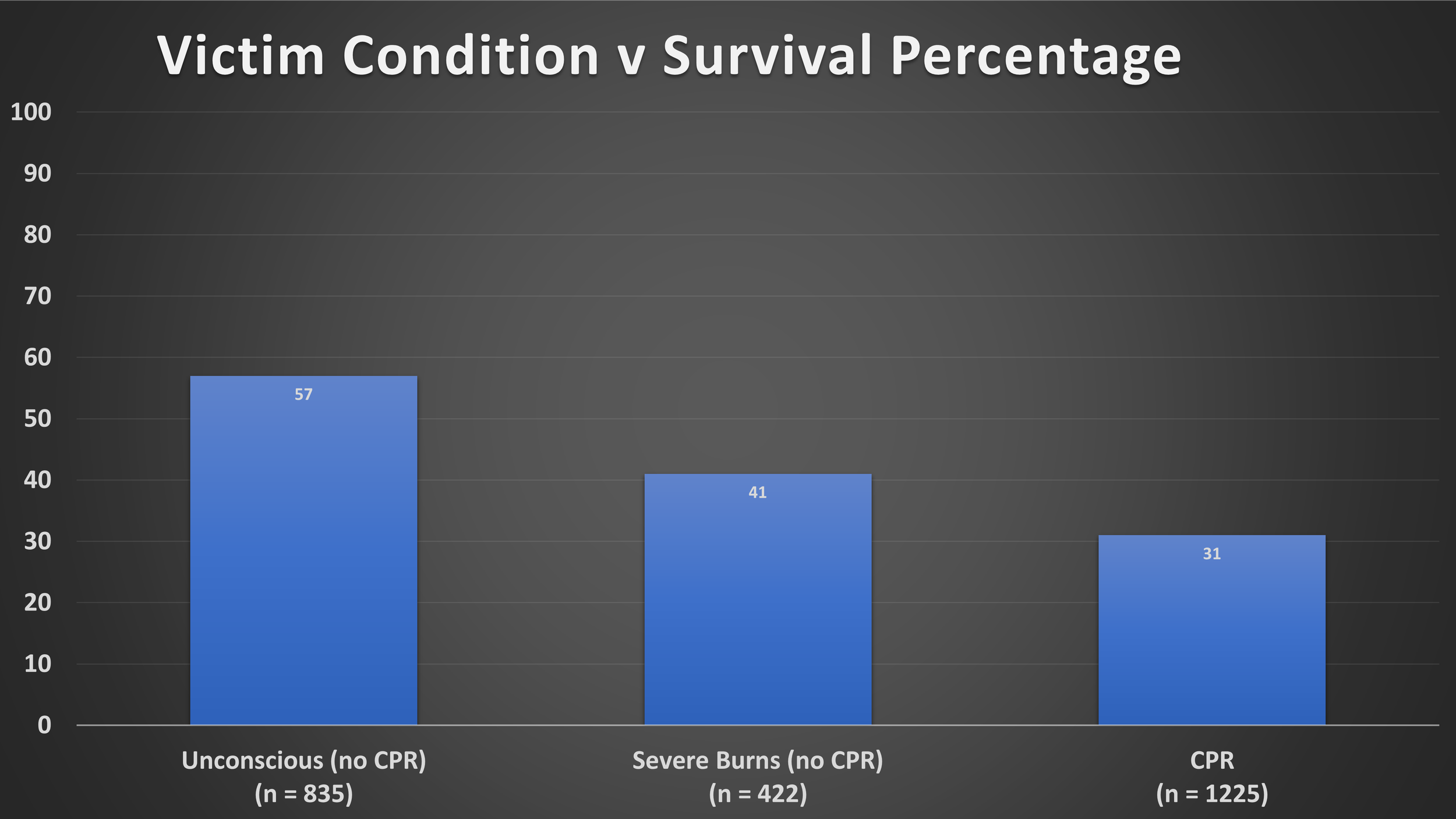
Data Attribution : Data referenced on this page is sourced from the Firefighter Rescue Survey © 2016 F-ODE, used under the Creative Commons Attribution 4.0 International License (CC BY 4.0). Source: FirefighterRescueSurvey.com License: creativecommons.org/licenses/by/4.0/
How do we effectively improve victim survivability?
Firefighters have traditionally removed victims through interior pathways because these routes are familiar, routinely accessible, and consistent with long-established training. This approach remains effective in many situations, but today’s fireground presents new challenges. Victims encountered during residential fires are increasingly heavier, more difficult to grip than training dummies, and harder to move quickly, which can slow interior drags and increase exposure for the victim.
Data from the Firefighter Rescue Survey highlights an important operational gap: although VES tactics successfully locate about 80% of victims in the initial room of entry, only 14% of total victims are removed through a window egress.
The growing emphasis on survivability and efficiency has led many departments to adopt more focused, aggressive primary search techniques, particularly approaches that prioritize areas with the highest likelihood of victim presence. Bedrooms (often accessible from exterior windows) continue to be among these high-probability spaces. Incorporating window-oriented search strategies into initial operations can shorten search times, reduce unnecessary movement inside hazardous environments, and create faster removal pathways once victims are located.
However, widespread adoption has been slowed by limited exposure in training, uncertainty about coordination between interior and exterior crews, and the natural momentum of traditional search culture. As a result, window-based tactics are not always used to their full potential.
Recognizing this, refining how firefighters remove victims (not to replace established methods but to complement them) can preserve the time savings window-initiated searches provide. Aligning the removal point with the entry point minimizes interior travel, limits disorientation, and reduces cumulative hazard exposure to the victim.
The Search Ladder system supports this evolution by combining an entry tool with an integrated victim-egress capability. This dual-purpose design streamlines operations, reduces physical strain, and enhances the speed and effectiveness of window-oriented rescues. Rather than changing the mission, it strengthens the tactics that already work—helping firefighters bring victims out faster and more efficiently.