
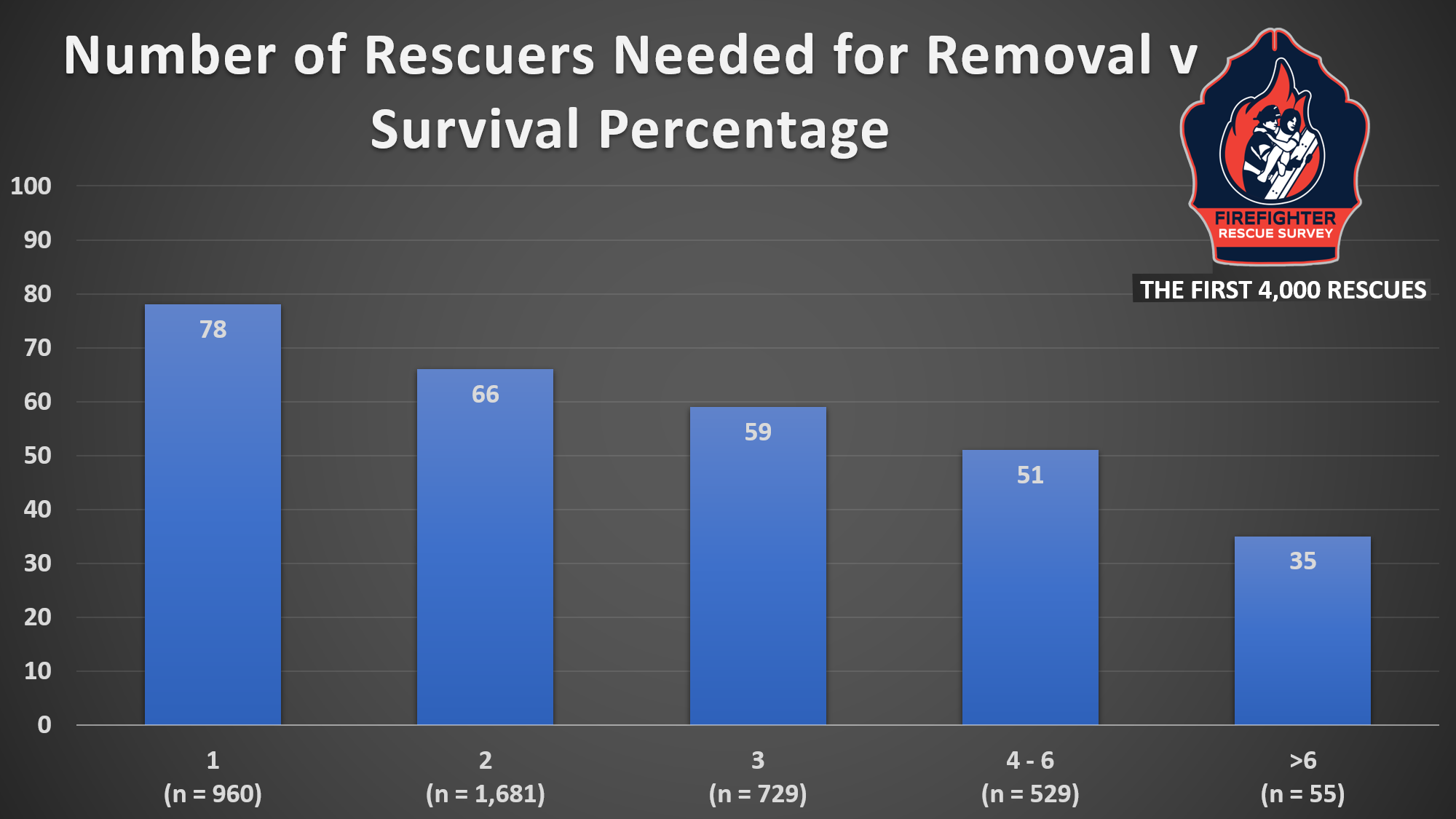
Data Attribution : Data referenced on this page is sourced from the Firefighter Rescue Survey © 2016 F-ODE, used under the Creative Commons Attribution 4.0 International License (CC BY 4.0). Source: FirefighterRescueSurvey.com License: creativecommons.org/licenses/by/4.0/
The goal is to develop and implement tools or techniques that allow fewer firefighters to effectively use leverage and positioning, especially when dealing with unconventional victims. These are the rescues that typically require more personnel, more time, and greater effort—which directly correlates with higher mortality rates.
By finding ways to do more with less, we improve efficiency, reduce exposure time in the IDLH environment, and ultimately give every victim, regardless of size or condition, the best possible chance at survival.
This becomes even more critical in departments operating with three-person crews, or even two-person crews in rural or volunteer settings, where backup may be three, four, or even five minutes away, if not longer.
Every one of those minutes adds to the victim’s time in a toxic, life-threatening environment. And every delay increases their chance of mortality. In these situations, having tools and tactics that allow smaller crews to remove victims quickly isn’t just helpful. It’s essential.
My goal with First IN Mounts is to implement a system that removes the need to call for additional manpower, request a window-to-door conversion, or have a prolonged rescue.